What I read in 2017


Last year I started writing down a list of the books I read and who recommended them to me. At the beginning of January, I purchased a Kobo e-book. It was the best purchase I made in years. I still think that there is a charisma to reading ink on paper but I’ll have more principles when I have fewer children living at home.

The Kobo is easy to tuck into my purse and I can read in bed without bothering my bed-mate(s). Unfortunately, it prevents me  from supporting my local independent bookstore (if you never visited Mill Street Books in Almonte, please do: it’s everything you ever dreamed a bookstore to be.) But results speak for themselves: I read more books in 2017 than in the previous 10 years combined. Here is the list of books I read in 2017. Since life is too short to read crappy books, I do not feel an obligation to finish a book I am not enjoying. It follows that I recommend all those books just for finishing them.

1. “On Writing: A Memoir of the Craft” by Stephen King. Non-fiction/Memoir. Paperback. Recommended by: Brainpickings. This is on the must-read list for any creative type. Quote: “Being swept away by a combination of great story and great writing — of being flattened in fact — is part of every writer’s necessary formation. You cannot hope to sweep someone else away by the force of your writing until it has been done to you.”

2. “The Night Circus” by Erin Morgenstern. Fantastic/YA/Fiction. Book. Recommended by: The Protagonist Podcast, episode 073 (it’s one of their most downloaded episodes). I remember reading after finishing the book that it had been started as a NaNoWriMo project and not being surprised: it has a “pieced-together” quality that was disconcerting at times. Reading the book, I was delighted by Erin Morgenstern’s gift of imagination. She describes the magical and the transcendent with a rare skill but I found that the story lacked focus and rhythm and that the structure was unnecessarily confusing.

3. “A Boy in the Moon: A Father’s Journey to Understand His Extraordinary Son” by Ian Brown. Memoir/Non-fiction. Book. Recommended by: I found it in a used bookstore and thought it would be good background reading for my own novel.

4. “The Evening Chorus” by Helen Humphreys. Historical Fiction. Book. Recommended by: I found this book in my car, that’s all I can say. It’s beautifully written, from a “craft of writing” perspective. Every sentence is a work of art. That said, it also lacked focus and read like a collection of story starts and hints of characters. As Stephen King wrote in “On Writing” (paraphrasing someone else, I think): “If you put a gun on the mantel in chapter 2, you better make sure someone picks it up in chapter 4.”

5. “The Headmaster’s Wager” by Vincent Lam. Historical fiction. Kobo e-pub. Recommended by: my friend Johanne Wagner of Twins for Hope. Vincent Lam is one of my favourite writers and his debut “Bloodletting and Miraculous Cures” is my aspirational book: I re-read it as a model of how I would want to write someday. In “The Headmaster’s Wager”, the man falls into a hole and digs himself in deeper and deeper until all those he loves are dead, most of them because of his bad calls. He is left with nothing but his sense of self-preservation, we are left with the start of “Bloodletting and miraculous cures.”

6. “Killers of the Flower Moon: The Osage murders and the birth of the FBI” by David Grann. Investigative journalism/non-fiction. Kobo e-pub. Recommended by: The Longform podcast, episode 241. Non-fiction reading like a true murder-mystery about a dark episode of American history. From the synopsis: “In the 1920s, the richest people per capita in the world were members of the Osage Indian Nation in Oklahoma. After oil was discovered beneath their land, the Osage rode in chauffeured automobiles, built mansions, and sent their children to study in Europe. Then, one by one, they began to be killed off.” This book is masterfully written and researched.

7. “There are no children here: the story of two boys growing up in the other America” by Alex Kotlowitz. Investigative journalism/non-fiction. Kobo e-pub. Recommended by: The Longform podcast, episode 240. This book should be on the reading list for humanity, especially if you think that there is no such thing as privilege. This is a book that blew my mind, I have no more eloquent way to describe it. It took me right to Andrew-Horner Homes. It’s one thing to know that inequality exists at our doorsteps, it’s another to experience it at the hands of a gifted writer.

8. “American Kingpin: The epic hunt for the criminal mastermind behind the Silk Road” by Nick Bilton. Investigative journalism/non-fiction. Kobo e-pub. Recommended by: The Longform podcast, episode 244.  Everything I knew about the Silk Road I learned from The Good Wife. I started the book, I finished the book. I may have taken a pee break at some point. Page-turners are few and far-between in non-fiction, this is one of them.

9. “Papillon” by Henri Charrière. Questionable auto-biography/non-fiction fiction. Kobo e-pub. Recommended by: My grade 9 teacher used to read this book out loud (from memory) to his classes in May-June on the belief that there was no point trying to teach anything after the weather turned nice. This is the auto-biography of Henri Charriere, a French man accused of a murder he did not commit and sentenced life imprisonment in the penal colony of French Guiana. This is the story of his obsession with escape and revenge. Large parts of the book are unbelievable, some smack of delirium (like that South America Native village?), but you read-on because you want to believe. A hell of a caper.

10. “The Great Gatsby” by F. Scott Fitzgerald. Fiction, classic. Kobo e-pub. Recommended by: Life. There are some books that you have to read. This is one of them.

11. “The Grapes of Wrath” by John Steinbeck. Fiction, classic. Kobo e-pub. Recommended by: Bruce Springsteen.

12. “The Blind Side: The Evolution of Game” by Michael Lewis. Investigative journalism, non-fiction. Kobo e-pub. Recommended by: The Longform podcast, episode 91. This is a book that will make you care about football the same way Friday Night Lights did: come for the stories, stay for the football.

13. “A visit from the Goon Squad” by Jennifer Egan. Fiction. Kobo e-pub. Recommended by: I first heard Jennifer Egan on Q and was smitten by her description of her creative process: it spoke to all my nook and crannies as a writer. Two days later, I heard Jason Isbell — my current overwhelming creative crush — mention “Visit from the Goon Squad” during an interview with George Saunders. So I knew I had to read it. This way, when I meet Jason Isbell, I can talk about something intelligent instead of melting in a puddle of goo. Nah… who am I kidding?

14. “Writing Better Lyrics” by Pat Pattison. Paperback. I don’t remember how I came across this book but one of my favorite songwriters of all times, Gillian Welsh, wrote its foreword. I’ve been reading this book for 18 months but I read a little, then try to apply it to my songwriting. Then read a little more.

15. “Story Grid: What Good Editors Know” by Shawn Coyne. Kobo e-pub. This is the book that sent me to New York City for a writing workshop. It’s informing a lot of my writing, whether I follow it or not.

That’s it for 2017! I am currently reading “All the Light we cannot see” on my Kobo and Sherlock Holmes in paperback. I have a mile long wish list at the Kobo store. What are reading these days?
Short Story: November Snow (3-minute read)


Evening tiptoes around the mall like a thief. Hallways turn quiet as the thinning flow of workers and commuters marks the hours with the reliability of a Swiss watch. Nestled in the basement of an office tower, the shopping centre opens like a cave. Artificial light shines through crystal chandeliers, hiding the darkness descending on the city.

Against the off-white marble floors and walls, fluorescent light flickers with harsh loneliness. Each store floats like an island with its unique lexicon and culture. A diverse cast performs closing rituals in silence, counting bills and retrieving castaway clothes. Dreary, November brings a slump to the retail market. Numbers are down, sales are slow, eyes are red and hands are chapped.

The first days of November had been cold in the usual back-and-forth of Fall. Bait and switch, catch and release. Crisp and warm sunny days had rolled into the bitter windy cold of winter without the calming effect of snow.

Attacking a pile of sweaters, a young woman takes note of her 18th birthday as it disappears into a haze of classes and work. A fitting welcome into adulthood, she thinks with a smirk. A pang of longing for the simplicity of childhood and the smothering of family comes and goes. She glances at her watch. 5 more minutes.

Lifting her eyes from the clothes she is folding, she sees him hopping off the escalator. His step is bouncier than usual and he smiles in the manner of someone caught in the delight of his own joke. His eyes break into two half moons when he sees her. She catches her breath. Whenever she thinks she has this crush licked, he knocks her out with a smile.

Their friendship had been born in the most usual way, bound by the experience of unrequited love. She loved him and he loved a girl who didn’t even know his name. He needed someone to listen and she needed him. Their bond flourished in the imperfection of who they could be to each other, without pretense or artifice. A flawed version of love to a heart wired for romantic passion, yet something closer to the freedom and safety of unconditional love. They lived in a space of longing and dreams where grand romantic gestures were given and received without fear or expectations.

He couldn’t stand in place when she walked out of the store: “Come on, I have something to show you!” They started walking side-by-side in silence. “Thank you for picking me up,” she said, not expecting a reply. They turned a corner as the stores closed one-by-one, dropped a quarter in a lonely merry-go-round and walked away as the music echoed in the empty corridor.

Up ahead, a wall of glass doors leading to the street appeared as a perfect dark rectangle. Looking at the darkness, he stopped saying: “Now I have to cover your eyes! It’s your birthday gift!” He took a handkerchief from his coat pocket, the one he wore on his forehead like Axl Rose, and tied it gently behind her head. The smell of his hair made her knees weak but she was too curious to give this sudden intimacy more than a moment’s notice. She could hear the excitement in his voice as he led her to the door and stepped out into the crisp evening air. “You can look now!”

When she removed the blindfold, large snowflakes were falling on her face, lit by a single street lamp. A thick layer of snow laid untouched on the street and sidewalks, absorbing the sounds of the city, making everything cozy under the overcast sky. November had lost its sharp angles, replaced for an evening by the warmth of a Winter’s night.

“Happy Birthday!” he said. They walked away arm-in-arm like two children, leaving four footsteps behind them.

Weightless


In Death in the Afternoon, Hemingway wrote about his early struggle to identify the concrete actions or sensations that caused an emotion. The art of writing lies not only in describing external events but in noticing the emotions stirred by such events and identifying precisely what caused the emotion. Skilled writers can bring their readers to feel an emotion when it is accurately set-up in their story:

I was trying to write then and I found the greatest difficulty, aside from knowing truly what you really felt, rather than what you were supposed to feel, and had been taught to feel, was to put down what really happened in action; what the actual things were which produced the emotion that you experienced.

As a person who feels everything keenly, I appreciate the beauty of a novel based on how it transports me into the world of feelings and emotions. There’s only so much I care about the physical set-up of a novel as long as I can inhabit the emotional life of its characters. Hemingway’s advice to notice an emotion and work your way backwards to describe how it came about inspired me to start writing-up my own deeply felt emotions. It’s a writing practice that I find both soothing and enlightening.

The text below was born out of a moment of pure delight. A mere flash whereupon I felt the weightlessness one might feel at the top of a roller coaster. It came and went but it lives on in my mind as something I recall when I need relief from the oppression of everyday worries and blocked creativity.

The road strays through the highlands’ bedrock like a streamer unrolling, erratic. On the horizon, the yellow line dips, dives and disappears at the will of a curve, only to reappear farther and narrower. Cedar and Spruce line the granite cliffs, their roots gnarled around rocky crimps and crevasses. A turn reveals a clearing of rolling hills covered in the bright emerald of the windswept grass. In the car, the landscape runs like a movie to the sound of Castle on the Hill:

“Found my heart and broke it here

Made friends and lost them through the years
And I’ve not seen the roaring fields in so long,
 I know I’ve grown
But I can’t wait to go home”

Wooden fences and grazing cattle announce a homestead. Driving up a hill, the road takes another sharp turn as it descends along the soft roll of a field. The urgent guitar riff leads into the chorus as a teenager on a dirt bike bursts from beside a cedar cop, his hair dancing in the wind. For an instant, we drive side-by-side as the music beckons:

“I’m on my way
Driving at ninety down those country lanes
Singing to “Tiny Dancer”
And I miss the way you make me feel, and it’s real
We watched the sunset over the castle on the hill”

The music continues as we part ways but I keep the feeling of wind in my hair and the weightlessness of speed.

About Moi


Véronique Bergeron, by Herself

Véronique started writing and illustrating stories in elementary school when she discovered her father’s typewriter. Elementary school was not kind to this quiet introspective child: she became the bane of her teachers’ existence by learning to read before it was permitted. While everyone was learning vowels, Véronique was reading books by Sophie Comtesse de Segur and learning what fate awaited young girls with unbridled imaginations and a lazy streak. This was in the late ’70s in the Province of Quebec where the biggest classroom management issue was precocious readers.

Fast-forward to high school and Véronique is excelling in French, learning English by reading Agatha Christie and failing in math and science. A slow STEM death by a million unanswered questions: “If you were listening, they said, you wouldn’t ask questions.” Véronique graduated high school in 1991 with a diploma, a repressed creativity and the certainty that she was not as smart as people thought she was. She abandoned her dream of becoming a midwife and applied to Law School after getting a College degree in sex, drugs and rock & roll.

Law School conformed to the contours of her brain. For the first time, Véronique saw decent grades appear on her transcripts. To avoid taking Law School for granted {or maybe because she didn’t know how babies were made?} Véronique got pregnant the following summer. And again the following summer. And again just before graduating. In a strange twist of fate, she learned as much about normal pregnancy and childbirth in Law School as do most students in Med School.

In 1995, Véronique punched way above her weight and married the world’s last gentleman. It turned out to be the single best career decision she ever made.

With her law degree in hand, Véronique decided to stay home to care for her three young children. She hung her diploma on a nondescript wall and carried on the anonymous life of the mother of many, adding two more twigs to her fruitful family tree.

We are not sure if Véronique got bored by the quiet with 4 children or if she thought she could get a pee break by finding a real job but she applied for a Master’s in Law with specialization in biomedical ethics while expecting her 5th child and got accepted on her due date. When her infant son was 5 months old, she started commuting from Ottawa to McGill University in Montreal to complete her Master’s degree.

During her time at McGill, Véronique published two Scholarly Articles with Very Serious Titles, including My idea of natural childbirth is ‘no make-up’: {re-titled for publication The ethics of cesarean section on maternal request.} Her practicum were at the Montreal Children’s Hospital neonatal intensive care unit and the Children Hospital of Eastern Ontario neonatal intensive care unit. Her thesis topic was informed consent in neonatal intensive care through the lens of legal pluralism. Or something.

After graduating, she lectured in bioethics at St-Paul’s University in Ottawa and found work as a legislative assistant for a federal Member of Parliament, a job renonwed for requiring no education whatsoever.

Véronique had her sixth child while working as a political staffer. Shortly before the Canadian election campaign of 2011, Véronique got pregnant with her seventh child and accepted a position as her boss’s campaign manager because why the heck not. That’s when the universe thought “Let’s see what she does with that one!” and threw her a curve ball: in the thick the election campaign Véronique found out that she was expecting twins. Babies number 7 and 8 if you are still counting.

Véronique delivered a successful election campaign and won a pair of babies in 2011 {but was mostly noticed for paying more in childcare than she earned on the Hill}. In a spectacular feat of poor timing, Véronique was offered a bioethics consultant position for a healthcare institution in Montreal halfway through her twin pregnancy. She turned down this unique opportunity, fearing that her Master’s degree would end-up being giant money cigar. To avoid being proven right, she started writing a novel based on the adjoining worlds of law and medicine since it worked so well for John Grisham.

In 20-something, and the year after that, {it’s a bit of a blur thank goodness for journalists} Véronique was invited to participate in the Ottawa Human Library Project. In 2014 she gave birth to her 9th child {or so the papers tell her.}

While on bed rest hatching her twins, Véronique started her first personal blog Vie de Cirque (Circus Life), offering the no-nonsense perspective of a mother of many to a small but loyal readership. Vie de Cirque eventually morphed into Fearless Family Life. While her writing and ideas are often complimented, her Internet fame came from spending only $25 per kid on Christmas gifts in 2015 {but not for real}.

Véronique’s most spectacular failures include — but are not limited to — homeschooling her children and crowdfunding her creative work {on both Kickstarter and Patreon} . She came within a tenth of a point of graduating summa cum laude and has never won a single writing competition, including the CBC Short Story Contest. She will likely remain anonymous, remembered by no one but her family as someone who tried, but not quite hard enough, to become a writer. The dog will remember her as the person who fed her. Until someone else does.

Veronique has 9 children, all hers, all from the same father, aged 21 all the way down to 3 and works as a technical writer. She has been potty training for the last 19 years. She still hasn’t it figured out.


Podcast Episode 13: The Deal with Teenagers Part 1


Today’s podcast is titled “The deal with teenager” and is the first part of a two-part series on handling the delicate balance of privileges and responsibilities with our teenagers and young adults.

Parenting teenagers is like flying a kite: it’s all in the art of giving enough rope and maintaining tension. Should the kite ever land in a tree, would you rather be around to help your teen untangle the mess or leave them to figure it out? Some parents will say “Let them figure it out on their own, they have to learn eventually.”

I take the longer view on that one: my teenagers might figure it out by cutting all the strings and burning down the tree, leaving them with no kite and a burnt down neighbourhood; or I might help them figure out how they can climb the tree, untangle the strings and, should they have to cut it, do it in such a way as to preserve as much of the kite’s functionality as possible. Then hopefully they will have learned something about getting kites out of trees and will be better equipped to do it themselves the next time it happens.

I once met a parent who was looking for advice on handling a request for money from a young adult child. We got chatting about lending money to our kids. She said: “I only ever lend money to my children because I want to teach them the importance of paying back debts.” I said: “I’ll let the bank teach them the importance of paying back debts when they repossess their cars. As for me, I’ll teach them that their family always has their back.” We worry a lot about what we might teach our teenagers by helping them out of a hard spot; but there’s a whole wide world of people out there who don’t love them. Let the world teach them hard truths: you’re the only one who can teach them unconditional love and support. I wrote a blog post about that, you can read it h e r e.

As promised in the podcast, this is a picture of our Subaru after it took a pick-up in the teeth. For the whole story, you’ll have to listen to the podcast.

The podcast opens with an update on my blogging and the deal with teenagers —  including how our car got smashed — start around the 8:30-minute-mark.

Thank you for listening and please come back for part 2.

http://fearlessfamilylife.com/8-things-i-still-do-for-my-teenagers-time-and-weather-permitting/

New podcast: Where have I been and a reflection on kinship


Hey everyone! Long time no podcast!

Yesterday my husband took our teenage daughter out on a movie date and I took the opportunity to record a new podcast. I rarely record when my husband and teens are in the house because someone always crashes into the room I’m using to tell me something wholly irrelevant to the topic I’m discussing. Like “I’m going to bed” or “Can I have gas money.” I guess this is where the dedicated studio with the “On Air” light came from. At some point my dishwasher sounds like I’m flushing a toilet but otherwise the sound quality is half-decent.

In this podcast, I reflect on the nature of crowdfunding and why I don’t feel comfortable charging my patrons for the quality of product I’m releasing. There is an awkward-teenager phase to growing a blog or a podcast where you make some money but not enough to hire help, learn a new skill, or buy better equipment, let alone leave your day job. The result is something that should sound professional — because I am paid for it — but doesn’t.

The question I had to ask myself as a creator was: “Is the forward momentum of my blog and website strong enough to justify pushing through the awkward-teenager phase?” Does the trajectory of my podcast  suggest that I will someday earn an income and build a professional presence on the web? To me, the end goal of having patrons is not to support my hobby, it’s to make writing and podcasting my profession. The money I am currently squeezing out of my patrons doesn’t allow me to move out of the hobby realm into the professional realm, and the trajectory of my crowdfunding efforts doesn’t suggest that it will for another 4 years. That’s way too long to expect my early supporters to humour me.

In the second part of the podcast, I talk about a trip to France I made last summer with three of my children. I reflect on the ties that bind us to our kin, despite time and distance, and the importance of building a strong family culture and identity.


Matin d’octobre


Sous la chaleur timide d’un matin d’Octobre, le sol s’étire et expire une couche de brume comme un soupir. S’élevant vers le ciel qui les appelle, les gouttelettes se prennent aux aux herbes longes que le contre-jour couronne de lumière. L’horizon se dilue comme une aquarelle au passage de l’eau que le ciel rappelle à lui. La nature retient les nuages entre ciel et terre.


Virtual Open Mic: What’s that?


There’s a new category on my blog, the “Virtual Open Mic.” What is that?

Last January, I made the New Year resolution to participate in an open mic event. The goal was to overcome my very deep-set fear of being seen and heard. Let me tell you, it’s very hard to grow as a creative person when you are deathly afraid of being vulnerable. Since music is by far the medium that makes me feel the most exposed, I decided to fight fire with fire and try to sing in public.

When I looked into the open mic scene in Ottawa, I learned that venues use open mic events to draw clients on typically slow times. Typically slow times are times when normal people do what normal people do on weekdays evenings or Sunday afternoons instead of going out in bars. See for yourself.

Since the open mic scene in Ottawa is making it really easy for me to wriggle out of a potentially mortifying situation, I decided to create an Instagram account and a dedicated corner on my blog for my virtual open mic. If you would like to participate in my virtual open mic, send me a line. Maybe we can make something fun out of this, with testimonies, personal stories and music. Let’s see where this go, shall we?


October skies


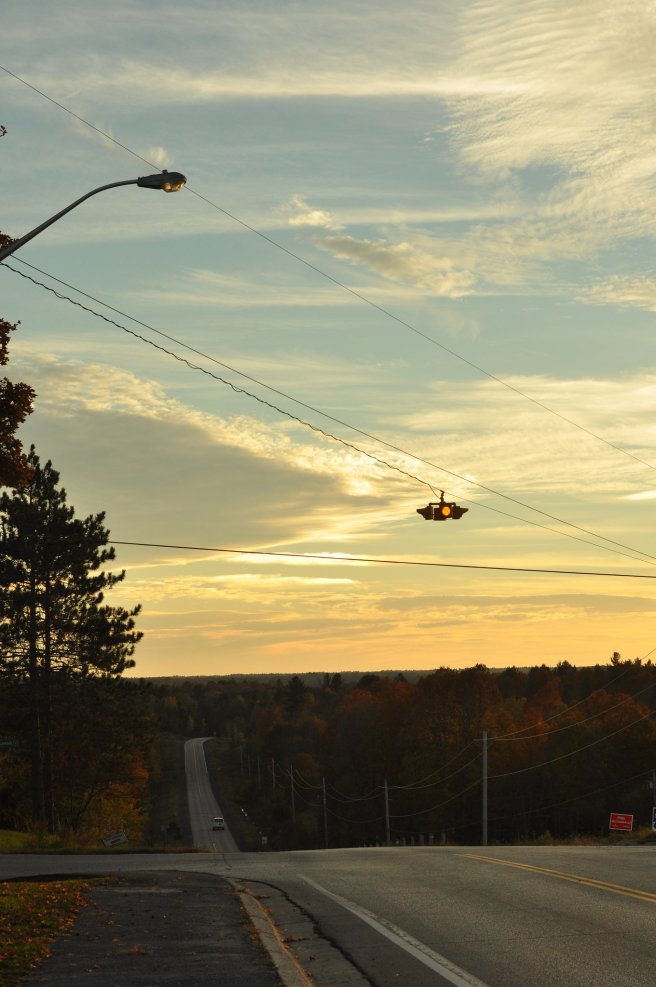
August stretches like a sleepy tomcat over early October days.
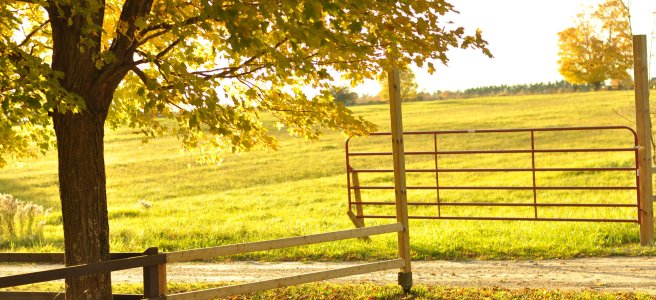
Encased in the emerald of an evergreen forest, the fields rest in the blush of the setting sun, exhaling the day’s heat like an aura. The earth glows in the evening light, returning to the sun its radiance.

~ Lanark Highlands, October 2017